
How Can Industrial Modular Housing Transform Industrial Construction?
Abstract: Industrial Modular Housing has emerged as a transformative solution in the construction industry, offering flexible, cost-effective, and rapid deployment of industrial units. This article delves into the core aspects of industrial modular housing, providing detailed product specifications, answering common questions, exploring practical applications, and highlighting industry trends that are shaping the future of industrial construction.
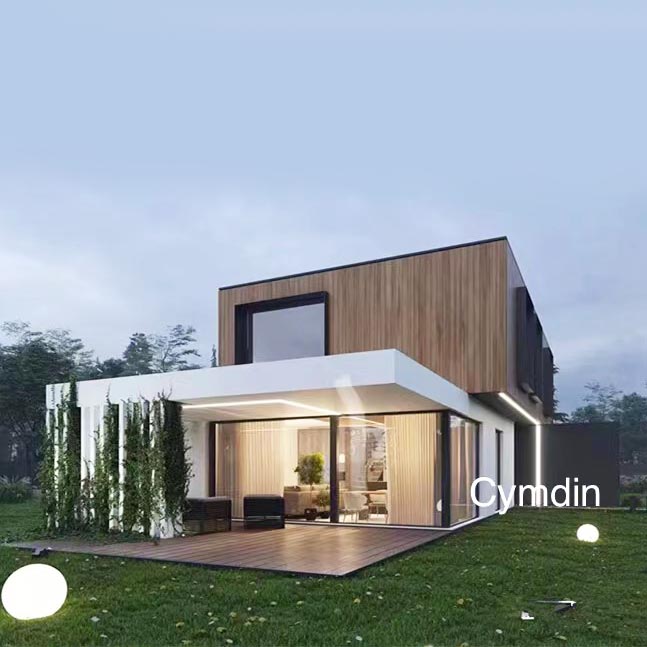
Table of Contents
1. What is Industrial Modular Housing and Its Core Specifications? 2. How to Implement Industrial Modular Housing in Different Industrial Projects? 3. What Are the Frequently Asked Questions About Industrial Modular Housing? 4. How Industry Trends Are Driving the Adoption of Modular Housing Solutions?
1. What is Industrial Modular Housing and Its Core Specifications?
Industrial Modular Housing represents a new paradigm in construction, combining prefabrication, standardization, and flexibility to deliver industrial units efficiently. These modular units can be assembled on-site with minimal disruption, offering a high degree of customization while maintaining structural integrity and compliance with industrial safety standards.
Key specifications for Industrial Modular Housing include:
| Specification | Details |
|---|---|
| Unit Dimensions | Standard 20ft, 40ft modules; customizable lengths and widths based on project requirements |
| Materials | Galvanized steel frame, insulated sandwich panels, fire-resistant coatings |
| Structural Load | Designed for up to 1500 kg/m² roof load; 2000 kg/m² floor load |
| Insulation | 50-100mm high-density polyurethane, thermal efficiency rating R-5.5 to R-7 |
| Electrical & HVAC | Pre-wired electrical systems, modular HVAC integration for industrial climate control |
| Assembly Time | Typically 2-4 weeks for standard units depending on project scale |
The modular design ensures that each unit is scalable, transportable, and adaptable to evolving industrial needs, making it a viable alternative to traditional construction methods.
2. How to Implement Industrial Modular Housing in Different Industrial Projects?
Implementing Industrial Modular Housing requires strategic planning, understanding project-specific requirements, and efficient integration of prefabricated units. The following steps outline how modular housing can be deployed effectively:
Step 1: Needs Assessment and Planning
Identify project requirements such as floor space, load-bearing capacity, and environmental conditions. Evaluate the modular housing options that meet industrial standards and consider customization for unique industrial processes.
Step 2: Design and Customization
Utilize CAD-based planning tools to design modular units, integrating HVAC, electrical, and safety systems. Determine unit layouts to optimize space utilization and workflow efficiency within industrial facilities.
Step 3: Prefabrication and Quality Control
Construct modules in factory-controlled environments to ensure quality, consistency, and compliance with industrial safety regulations. Pre-install essential systems to minimize on-site construction time.
Step 4: On-Site Assembly and Commissioning
Transport prefabricated units to the industrial site and assemble using standardized connection mechanisms. Conduct final inspections, test systems, and ensure compliance with operational standards before full deployment.
Applications of Industrial Modular Housing
- Temporary or permanent factory extensions
- Industrial offices and administrative spaces
- Storage units and controlled-environment facilities
- Worker accommodations for remote industrial sites
- Data centers and technical labs requiring rapid deployment
3. What Are the Frequently Asked Questions About Industrial Modular Housing?
Q1: How durable is Industrial Modular Housing compared to traditional construction?
A1: Industrial Modular Housing is designed with reinforced steel frames and high-quality materials that meet industrial-grade standards. The durability often matches or exceeds traditional construction due to factory-controlled production, precise engineering, and strict quality control measures.
Q2: Can Industrial Modular Housing be expanded or reconfigured?
A2: Yes, modular units are inherently scalable and reconfigurable. Additional modules can be added, removed, or reoriented to meet evolving industrial needs without significant structural modification or downtime.
Q3: How does Industrial Modular Housing impact project timelines?
A3: Modular housing significantly reduces construction time. Prefabrication allows concurrent site preparation and module construction, often cutting project timelines by 30% to 50% compared to traditional methods.
Q4: Are Industrial Modular Housing units compliant with industrial safety and building codes?
A4: All units are engineered to comply with international and local building codes, including fire safety, structural integrity, electrical, and HVAC standards, ensuring safe and reliable operation in industrial environments.
Q5: What are the transportation and installation considerations?
A5: Modules are designed for easy transport via standard trucks or container shipping. On-site installation typically requires cranes or forklifts, and units are interconnected using standardized mechanical and electrical systems to ensure seamless integration.
4. How Industry Trends Are Driving the Adoption of Modular Housing Solutions?
The industrial sector increasingly embraces modular housing due to trends such as urban industrial expansion, labor accommodation needs, sustainability mandates, and cost efficiency pressures. Key drivers include:
- Rapid Deployment: Industrial projects often require quick setup of operational facilities, and modular housing enables parallel construction and site preparation.
- Cost Efficiency: Prefabrication reduces labor costs, material waste, and delays associated with traditional construction.
- Environmental Sustainability: Modular units minimize construction waste and allow for energy-efficient designs, supporting corporate sustainability goals.
- Flexibility and Scalability: Industrial operations can adjust spatial requirements rapidly without long-term structural commitments.
Companies like Cymdin have pioneered industrial modular solutions that cater to diverse sectors, delivering reliable, adaptable, and cost-effective housing solutions. Their modular units combine precision engineering with on-demand scalability, making them an ideal choice for modern industrial applications.
For detailed consultation on integrating Industrial Modular Housing into industrial projects, contact us today to explore customized solutions that meet your operational requirements and project timelines.