
How Can Industrial Modular Housing Transform Modern Construction Efficiency?
Abstract
Industrial Modular Housing has rapidly emerged as a practical solution to long-standing challenges in the construction industry, including cost overruns, extended project timelines, labor shortages, and inconsistent quality. By shifting construction activities from traditional job sites to controlled factory environments, this building approach delivers predictable outcomes, scalable capacity, and reliable performance. This article provides a comprehensive explanation of how Industrial Modular Housing works, what problems it solves, and why it is increasingly adopted across industrial, commercial, and residential sectors. The content focuses on decision-making concerns, technical considerations, and real-world application value for buyers, developers, and project owners.
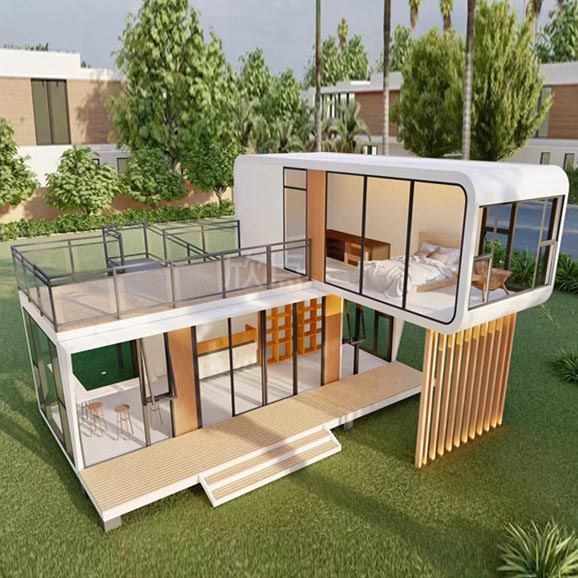
Table of Contents
- Understanding Industrial Modular Housing
- Key Challenges in Conventional Construction
- How Industrial Modular Housing Addresses These Pain Points
- Core Structural and Technical Features
- Applications Across Industries
- Cost, Time, and Quality Comparison
- Selection Criteria for Modular Housing Solutions
- Frequently Asked Questions
- Conclusion and Business Cooperation
Understanding Industrial Modular Housing
Industrial Modular Housing refers to a construction method in which building units are manufactured in standardized modules within a factory setting and then transported to the project site for rapid assembly. Unlike traditional prefabricated buildings, industrial modular systems are designed to meet permanent building standards, integrating structural strength, insulation, mechanical systems, and architectural finishes from the outset.
Each module functions as a complete structural component, engineered to fit precisely with others. This method significantly reduces on-site uncertainty while maintaining compliance with regional building codes and long-term occupancy requirements.
Key Challenges in Conventional Construction
Project owners and developers often face recurring issues when relying on traditional construction models. These challenges directly affect profitability, timelines, and operational stability.
- Unpredictable project schedules due to weather and labor availability
- Escalating material and labor costs
- Inconsistent construction quality across different sites
- High safety risks and on-site management complexity
- Difficulty scaling projects quickly for industrial expansion
These pain points are especially critical for industrial housing needs such as worker accommodations, logistics centers, remote project camps, and temporary-to-permanent facilities.
How Industrial Modular Housing Addresses These Pain Points
Industrial Modular Housing fundamentally restructures the construction workflow. Instead of sequential, site-dependent processes, production and site preparation occur simultaneously.
- Factory-controlled manufacturing ensures consistent quality standards
- Parallel production shortens total project duration
- Reduced on-site labor minimizes safety and coordination risks
- Standardized modules enable rapid replication and expansion
- Predictable costs improve budget planning and financial control
By adopting this approach, companies gain greater certainty in delivery timelines while maintaining structural reliability and design flexibility.
Core Structural and Technical Features
Industrial Modular Housing systems are engineered with durability, performance, and adaptability in mind. The following table outlines common technical characteristics found in high-quality modular housing solutions.
| Feature | Description |
|---|---|
| Structural Frame | High-strength steel or reinforced composite structures designed for long-term use |
| Thermal Insulation | Integrated wall and roof insulation to meet climate and energy efficiency requirements |
| Utility Integration | Pre-installed electrical, plumbing, and HVAC systems |
| Modular Compatibility | Standardized dimensions for flexible layout combinations |
| Surface Finishes | Factory-applied interior and exterior finishes for consistent appearance |
Applications Across Industries
Industrial Modular Housing is not limited to a single use case. Its adaptability allows it to serve multiple sectors with varying functional requirements.
- Industrial worker dormitories and staff housing
- Construction site offices and management facilities
- Mining, energy, and infrastructure project camps
- Emergency response and temporary housing projects
- Permanent residential and mixed-use developments
Companies such as Cymdin focus on delivering modular housing systems that can be customized to meet industry-specific operational needs while maintaining standardized production efficiency.
Cost, Time, and Quality Comparison
Decision-makers often evaluate construction methods based on three primary criteria: cost, delivery time, and quality stability.
| Evaluation Factor | Traditional Construction | Industrial Modular Housing |
|---|---|---|
| Project Timeline | Highly variable | Predictable and shortened |
| Cost Control | Susceptible to overruns | Predefined and stable |
| Quality Consistency | Dependent on site conditions | Uniform factory standards |
Selection Criteria for Modular Housing Solutions
When selecting an Industrial Modular Housing provider, buyers should consider both technical and operational factors.
- Manufacturing capacity and quality control systems
- Compliance with local and international building standards
- Customization capabilities for layout and finishes
- Logistics planning and on-site assembly support
- Proven project experience and delivery records
Evaluating these criteria helps ensure that the modular housing solution aligns with long-term operational and investment goals.
Frequently Asked Questions
Is Industrial Modular Housing suitable for permanent use?
Yes. Industrial Modular Housing is engineered to meet permanent building requirements, offering long service life and structural reliability.
How scalable are modular housing projects?
Modular systems are inherently scalable. Additional units can be manufactured and integrated as demand grows, without disrupting existing operations.
Can modular housing adapt to different climates?
Factory-controlled design allows insulation, materials, and systems to be adjusted according to environmental and climate conditions.
Conclusion and Business Cooperation
Industrial Modular Housing represents a strategic shift toward efficiency, predictability, and industrialized quality in construction. By addressing core challenges related to time, cost, and consistency, it provides a reliable foundation for modern development projects. Companies like Cymdin continue to advance modular housing solutions that align with global construction demands and evolving industrial applications.
If your organization is exploring efficient housing solutions for industrial or commercial projects, now is the time to evaluate modular construction advantages. Contact us to discuss tailored Industrial Modular Housing solutions and discover how your next project can achieve faster delivery with dependable results.