
What Makes a Residential Modular House Eco-Friendly?
A residential modular house is a home that is constructed in sections, or modules, in a controlled factory environment and then transported to the building site for final assembly. Unlike traditional site-built construction, which is subject to weather delays, material waste, and variable labor quality, modular construction brings the entire process indoors. This fundamental difference in how a home is built has profound implications for its environmental impact. From the moment the first module is designed to the day the home is occupied, every stage of the modular process can be optimized for sustainability in ways that are simply not possible with conventional construction.
The question of what makes a residential modular house eco-friendly is answered by examining the entire lifecycle of the building. It starts with the materials: engineered wood, recycled steel, and low-carbon concrete that reduce the embodied energy of the structure. It continues with the manufacturing process: precision cutting and assembly that minimize waste, and factory-controlled conditions that eliminate the moisture and contamination issues that plague site-built homes. It extends to the operational phase: high-performance insulation, energy-efficient windows, and airtight construction that reduce heating and cooling loads. And it concludes with the end-of-life phase: modular components that can be disassembled and reused or recycled. This article will explore each of these dimensions in detail, providing a comprehensive analysis of why a residential modular house is inherently more eco-friendly than its traditional counterpart, and how our factory at Shanghai Cymdin Industrial Co., Ltd. implements these principles in our modular home products.
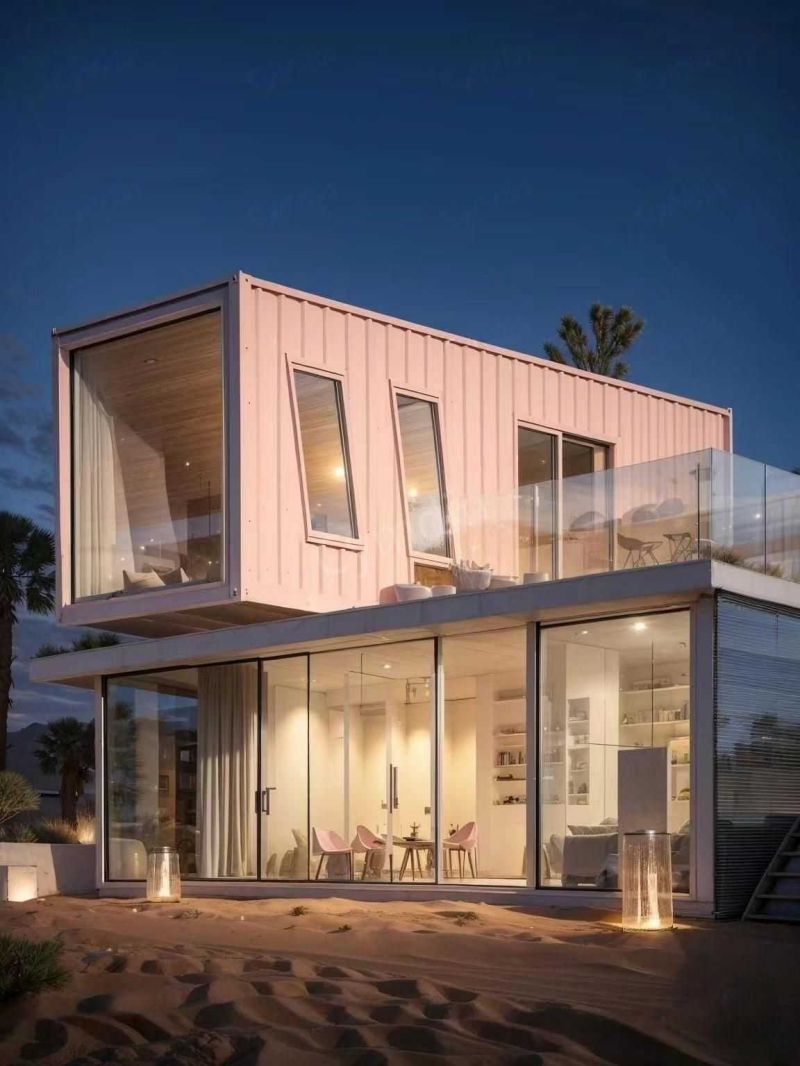
Table of Contents
- 1. The Material Equation: What Goes Into an Eco-Friendly Modular House?
- 2. The Factory Advantage: How Precision Reduces Waste
- 3. The Energy Performance: Why Modular Homes Operate More Efficiently
- 4. The Lifecycle View: From Construction to End-of-Life
- 5. Certifications and Standards: What to Look For
- 6. Frequently Asked Questions (FAQ)
- 7. Conclusion
1. The Material Equation: What Goes Into an Eco-Friendly Modular House?
The environmental impact of a residential modular house is determined, to a large extent, by the materials used in its construction. Traditional site-built homes rely heavily on concrete, which is responsible for approximately 8% of global carbon dioxide emissions, and virgin lumber, which contributes to deforestation and habitat loss. An eco-friendly modular house takes a different approach, prioritizing materials that have lower embodied carbon, are renewable, or are recycled. The most common sustainable materials used in modular construction are engineered wood products, recycled steel, and alternative cementitious materials.
Engineered wood products, such as cross-laminated timber (CLT) and laminated veneer lumber (LVL), are made by bonding layers of wood together with adhesives. They are stronger and more dimensionally stable than solid wood, and they can be made from smaller, faster-growing trees, reducing pressure on old-growth forests. CLT, in particular, has become a favorite material for modular construction because it is lightweight, strong, and can be precision-cut in the factory. Recycled steel is another key material. Steel is one of the most recycled materials in the world, and using recycled steel reduces the energy required for production by up to 75% compared to virgin steel. For the foundation and structural frame of a modular house, recycled steel offers excellent strength and durability with a much lower carbon footprint.
Alternative cementitious materials, such as fly ash and slag, can replace a portion of the Portland cement in concrete. This reduces the embodied carbon of the concrete by up to 40% without compromising its strength or durability. In addition, some modular home manufacturers use hempcrete, a mixture of hemp fibers and lime, as an insulation and wall material. Hempcrete is carbon-negative, meaning it absorbs more carbon dioxide than it emits during production. The table below summarizes the key sustainable materials used in eco-friendly modular homes, along with their environmental benefits and typical applications.
| Material | Environmental Benefit | Typical Application |
| Cross-Laminated Timber (CLT) | Renewable, sequesters carbon, low embodied energy | Walls, floors, roof structures |
| Laminated Veneer Lumber (LVL) | Made from fast-growing trees, high strength-to-weight ratio | Beams, headers, structural framing |
| Recycled Steel | 75% less energy than virgin steel, infinitely recyclable | Foundation, structural frame, roof trusses |
| Fly Ash / Slag Concrete | Up to 40% lower embodied carbon than standard concrete | Foundation, floor slabs |
| Hempcrete | Carbon-negative, excellent insulation | Wall insulation, non-load-bearing walls |
| Recycled Content Insulation | Diverts waste from landfills, reduces energy demand | Wall, floor, and roof insulation |
At Shanghai Cymdin Industrial Co., Ltd., our factory prioritizes sustainable materials in our residential modular house products. We use CLT and LVL for structural components, recycled steel for frames and foundations, and alternative cementitious materials for concrete work. We also offer a range of insulation options that incorporate recycled content. Our material selection process is guided by a lifecycle assessment that evaluates the environmental impact of each material from cradle to gate. This ensures that our modular homes are not just energy-efficient during operation, but also have a lower embodied carbon footprint from the very beginning.
2. The Factory Advantage: How Precision Reduces Waste
One of the most significant environmental advantages of a residential modular house is the way it is manufactured. Traditional site-built construction is inherently wasteful. Materials are delivered to the site in bulk, cut to size in the field, and any offcuts are typically discarded. Studies have shown that site-built construction generates 30-40% more waste than modular construction. This waste includes lumber offcuts, drywall scraps, packaging materials, and damaged components. In a factory environment, the same process is transformed. Precision cutting machines cut materials to exact dimensions, and the offcuts are collected and recycled or reused. The result is a dramatic reduction in waste.
The factory environment also allows for better inventory management. Materials are stored in a controlled environment, protected from moisture, pests, and weather. This prevents the damage and deterioration that often occurs on a construction site, where materials may sit exposed to the elements for weeks or months. The controlled environment also means that adhesives, sealants, and finishes can be applied under optimal conditions, ensuring better performance and durability. This reduces the need for rework and replacement, further reducing waste. The table below compares the waste generation of traditional site-built construction and modular construction.
| Waste Category | Site-Built Construction | Modular Construction |
| Lumber Offcuts | 15-20% of material | 2-5% of material |
| Drywall Scraps | 10-15% of material | 3-5% of material |
| Packaging Waste | High (bulk deliveries) | Low (optimized packaging) |
| Material Damage | 5-10% of material | 1-2% of material |
| Total Waste | 30-40% of material | 5-10% of material |
At our factory, we have implemented a comprehensive waste reduction program. Our CNC cutting machines are programmed to optimize material usage, nesting parts to minimize offcuts. All offcuts are sorted by material type and sent for recycling. We also use returnable packaging for our incoming materials, eliminating the need for disposable pallets and crates. Our factory has achieved a waste diversion rate of over 90%, meaning that less than 10% of our waste goes to landfill. This commitment to waste reduction is a core part of our environmental strategy and a key reason why our residential modular houses are more eco-friendly than traditional homes.
3. The Energy Performance: Why Modular Homes Operate More Efficiently
The environmental benefits of a residential modular house extend far beyond the construction phase. During the operational phase, which can last 50 years or more, the energy performance of the home determines its ongoing environmental impact. Modular homes are inherently more energy-efficient than site-built homes for several reasons. First, the precision manufacturing process allows for tighter construction tolerances. Gaps and cracks, which are a major source of energy loss in traditional homes, are minimized. Second, the controlled factory environment allows for the installation of continuous insulation, without the thermal bridging that occurs when insulation is interrupted by structural framing. Third, modular homes are often designed with high-performance windows, doors, and HVAC systems that reduce energy demand.
The airtightness of a modular home is one of its most significant energy advantages. In a traditional home, air leaks through the building envelope can account for 25-40% of heating and cooling energy use. In a modular home, the factory-applied seals and gaskets, combined with the precision fit of the modules, create a much tighter envelope. This reduces the load on the HVAC system and lowers energy bills for the homeowner. The table below compares the energy performance of a typical site-built home and an eco-friendly modular home.
| Performance Metric | Site-Built Home | Modular Home | Improvement |
| Air Changes per Hour (ACH50) | 5-10 | 1-3 | 60-80% reduction |
| Heating Energy Use (kWh/m²/year) | 80-120 | 40-60 | 50% reduction |
| Cooling Energy Use (kWh/m²/year) | 30-50 | 15-25 | 50% reduction |
| Thermal Bridging | Significant | Minimal | Continuous insulation |
| HVAC System Size | Larger | Smaller | Lower cost, lower energy use |
At Shanghai Cymdin Industrial Co., Ltd., our residential modular house products are designed to meet or exceed the most stringent energy codes. We use continuous exterior insulation, high-performance triple-glazed windows, and heat recovery ventilation systems. We also offer optional solar panels and battery storage, allowing the home to generate its own clean energy and reduce its reliance on the grid. Our factory conducts blower door tests on every module before it leaves the factory, ensuring that the airtightness of the final home meets our specifications. The result is a home that is not only comfortable and healthy but also exceptionally energy-efficient, reducing both the environmental footprint and the operating costs for the homeowner.
4. The Lifecycle View: From Construction to End-of-Life
An eco-friendly residential modular house is not just about the materials it is made from or the energy it uses. It is about the entire lifecycle of the building, from the extraction of raw materials to the end of its useful life. A lifecycle assessment (LCA) is the tool used to evaluate the environmental impact of a building over its entire life. For a modular house, the LCA typically shows a lower environmental impact than a site-built home across multiple categories, including global warming potential, acidification potential, and eutrophication potential. This is due to the combination of lower embodied carbon, reduced construction waste, and lower operational energy use.
The end-of-life phase is where modular construction has a significant advantage. Traditional buildings are typically demolished, and the mixed waste is sent to landfill. Modular buildings, by contrast, are designed for disassembly. The modules can be separated, and the materials can be recovered for reuse or recycling. The structural steel can be melted down and reformed. The CLT panels can be reused in new construction or chipped for biomass. The insulation can be recycled, and the windows and doors can be salvaged. This design-for-disassembly approach is a core principle of the circular economy, and it is one of the key reasons why a residential modular house is considered eco-friendly.
The following table summarizes the environmental impact of a modular house compared to a site-built house across the key lifecycle stages. The data is based on a comparative LCA study conducted in Europe.
| Lifecycle Stage | Site-Built House | Modular House | Environmental Advantage |
| Material Extraction | High impact (virgin materials) | Lower impact (recycled, renewable) | Reduced embodied carbon |
| Construction | High waste, high energy | Low waste, low energy | Waste reduction, energy savings |
| Operation (50 years) | High energy use | Low energy use | Reduced carbon footprint |
| End-of-Life | Demolition, landfill | Disassembly, reuse/recycle | Circular economy |
At our factory, we conduct a lifecycle assessment for every residential modular house design we produce. This allows us to identify opportunities for further improvement and to provide our customers with transparent data on the environmental performance of their home. We believe that the most eco-friendly building is not just the one that uses the least energy during operation, but the one that has the lowest environmental impact over its entire life. Our commitment to lifecycle thinking is a key differentiator for our modular homes and a core part of our value proposition.
5. Certifications and Standards: What to Look For
When evaluating the eco-friendliness of a residential modular house, it is important to look for third-party certifications and standards that verify the environmental claims. These certifications provide independent assurance that the home meets specific criteria for energy efficiency, material sustainability, and indoor environmental quality. The most widely recognized certifications for residential buildings include LEED (Leadership in Energy and Environmental Design), Energy Star, and Passive House. In addition, there are certifications specific to modular construction, such as the Modular Building Institute's (MBI) sustainability standards.
LEED certification is a point-based system that evaluates buildings across several categories, including energy and atmosphere, materials and resources, water efficiency, and indoor environmental quality. A LEED-certified home has been verified to meet high standards of environmental performance. Energy Star is a program run by the U.S. Environmental Protection Agency that certifies homes that are at least 10% more energy-efficient than standard homes. Passive House is a rigorous standard that requires a home to meet specific criteria for airtightness, insulation, and energy use, resulting in a home that requires very little heating or cooling. The table below summarizes these certifications and their key requirements.
| Certification | Key Requirements | Verification Method |
| LEED | Energy efficiency, water savings, material selection, indoor air quality | Third-party review of documentation and on-site inspection |
| Energy Star | At least 10% more efficient than standard homes | Third-party testing and verification |
| Passive House | Airtightness (0.6 ACH50), continuous insulation, high-performance windows | Third-party testing (blower door, thermal imaging) |
| MBI Sustainability Standard | Modular-specific criteria for energy, water, materials, and waste | Documentation review and site inspection |
At Shanghai Cymdin Industrial Co., Ltd., our residential modular house products are designed to meet the requirements of these certifications. We can provide the documentation and testing data required for certification, and we can work with our customers to achieve the specific certification they are targeting. Our factory is committed to transparency and to providing our customers with the information they need to make informed decisions about the environmental performance of their modular home.
6. Frequently Asked Questions (FAQ)
Question 1: What is the most eco-friendly aspect of a residential modular house?
Answer: The most eco-friendly aspect of a residential modular house is the combination of reduced construction waste, lower embodied carbon materials, and superior operational energy efficiency. The factory-controlled manufacturing process reduces waste by 50-70% compared to site-built construction. The use of recycled and renewable materials reduces the embodied carbon of the structure. And the precision construction and high-performance systems reduce the energy required for heating and cooling by up to 50%. Together, these factors make the modular house significantly more eco-friendly than a traditional home.
Question 2: How does modular construction reduce material waste?
Answer: Modular construction reduces material waste through precision cutting, optimized material usage, and a controlled factory environment. CNC machines cut materials to exact dimensions, and software optimizes the nesting of parts to minimize offcuts. The factory environment protects materials from weather and damage, reducing the need for replacement. Offcuts and waste are sorted and recycled, diverting over 90% of waste from landfill. These practices result in a waste rate of 5-10% for modular construction, compared to 30-40% for site-built construction.
Question 3: Are modular houses more energy-efficient than site-built houses?
Answer: Yes, modular houses are generally more energy-efficient than site-built houses. The precision manufacturing process allows for tighter construction tolerances and continuous insulation, reducing air leaks and thermal bridging. Modular homes often achieve airtightness levels of 1-3 ACH50, compared to 5-10 ACH50 for site-built homes. This reduces the energy required for heating and cooling by up to 50%. In addition, modular homes can be equipped with high-performance windows, HVAC systems, and solar panels, further reducing their environmental impact.
Question 4: Can a residential modular house be certified as eco-friendly?
Answer: Yes, a residential modular house can be certified as eco-friendly through programs such as LEED, Energy Star, and Passive House. These certifications provide independent verification that the home meets specific criteria for energy efficiency, material sustainability, and indoor environmental quality. To achieve certification, the home must be designed and constructed to meet the program's requirements, and it must be verified by a third-party inspector. Our factory can provide the documentation and testing data required for certification.
Question 5: What happens to a modular house at the end of its life?
Answer: A modular house is designed for disassembly at the end of its life. The modules can be separated, and the materials can be recovered for reuse or recycling. Structural steel can be melted down and reformed, CLT panels can be reused or chipped for biomass, and insulation can be recycled. This design-for-disassembly approach is a core principle of the circular economy, reducing the environmental impact of the building at the end of its life. In contrast, a site-built house is typically demolished, and the mixed waste is sent to landfill.
7. Conclusion
A residential modular house is eco-friendly for multiple reasons that span the entire lifecycle of the building. It starts with the materials: recycled steel, engineered wood, and alternative cementitious materials that reduce embodied carbon. It continues with the manufacturing process: precision cutting and factory-controlled conditions that reduce waste by 50-70% compared to site-built construction. It extends to the operational phase: high-performance insulation, airtight construction, and efficient HVAC systems that reduce energy use by up to 50%. And it concludes with the end-of-life phase: design for disassembly that enables material recovery and reuse. Together, these factors make the modular house one of the most environmentally responsible building methods available today.
At Shanghai Cymdin Industrial Co., Ltd., our factory is dedicated to producing residential modular houses that meet the highest standards of environmental performance. We use sustainable materials, implement waste reduction programs, and design our homes for energy efficiency and disassembly. Our commitment to sustainability is not just a marketing claim; it is a core part of our business strategy and our values. We invite you to contact us to learn more about our modular homes and how they can help you achieve your sustainability goals.
Contact Shanghai Cymdin Industrial Co., Ltd. today to discuss your residential modular house requirements and discover how our eco-friendly modular homes can reduce your environmental footprint.